
#1 Rated Rhinoplasty – New York City
Rhinoplasty is among the most complex procedures in facial plastic surgery, requiring precise control of bone, cartilage, and airway function. Small changes can significantly alter both appearance and breathing, which is why patients seek surgeons with deep, specialized expertise. Dr. Sam Rizk has devoted over 25 years to advancing rhinoplasty techniques that refine form while preserving structure and reducing downtime, producing results that are balanced, functional, and long-lasting.
Meet Your Nose Job Expert
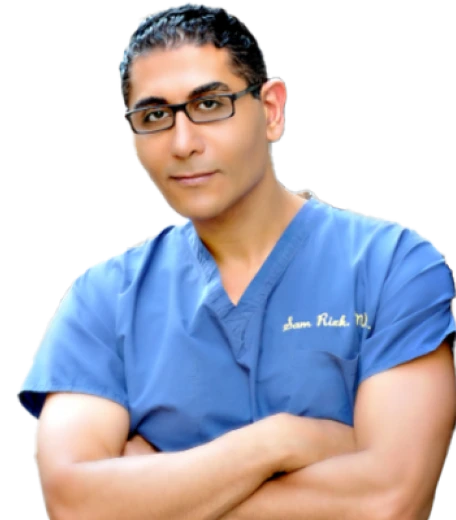
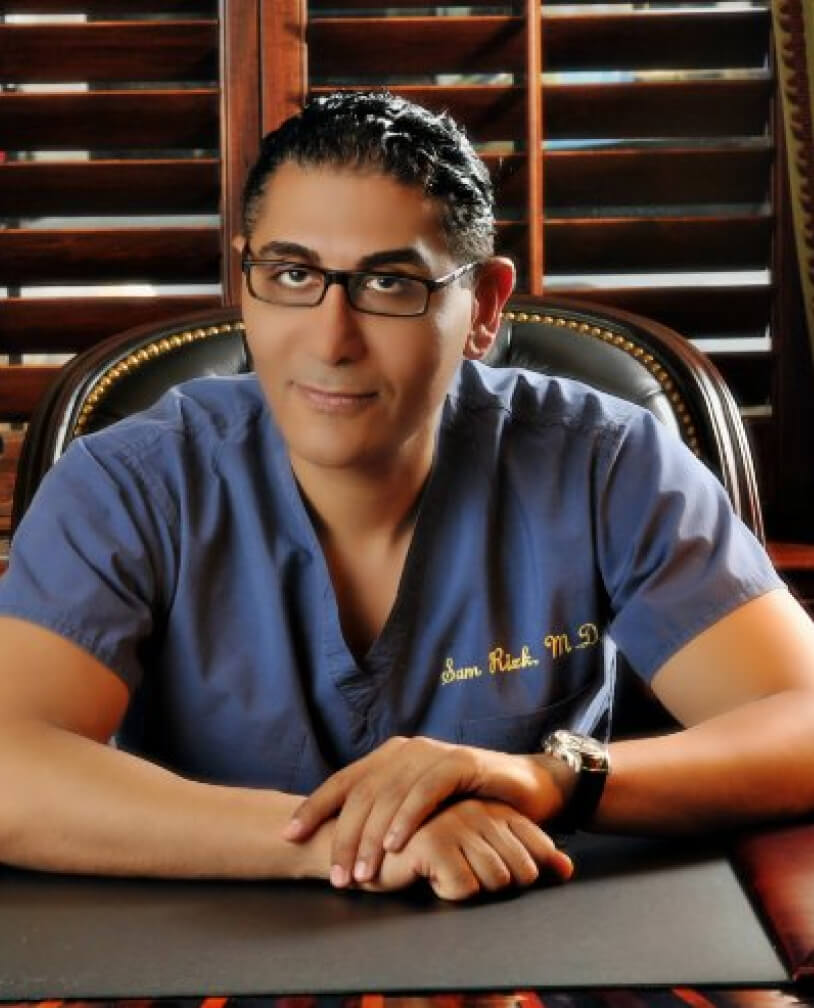
Dr. Sam Rizk is a double board-certified facial plastic and ENT surgeon who performs rhinoplasty in NYC. His experience makes him highly sought-after throughout the United States and internationally, having treated members of royal families, celebrities, entertainers, and patients from around the globe.
- Specializes in the nose and face – nose jobs, rhinoplasty, and facelifts
- Works with patients from all backgrounds and ethnicities
- Provides natural-looking results
- Trained to handle both the medical and cosmetic components of a nose job including septoplasty, correction of deviated septum, enlarged bridge,
- Hundreds of happy patients. You don’t have to take our word for it. You can read patient testimonials here.
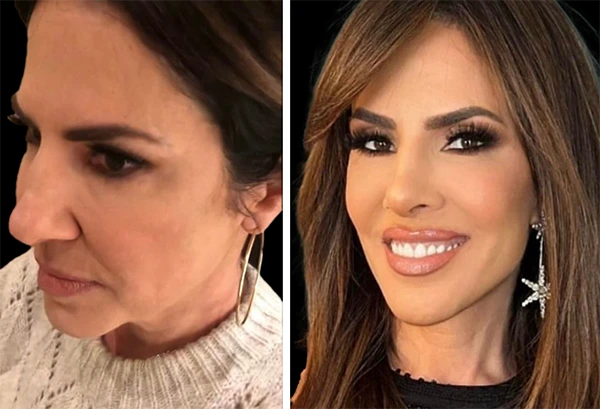
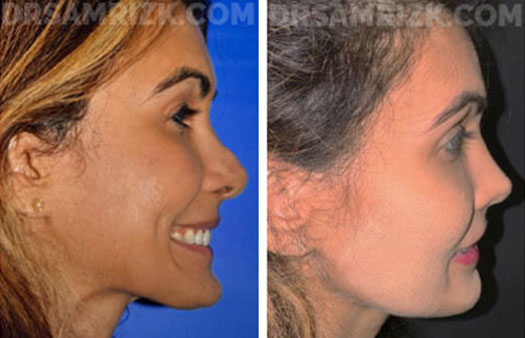
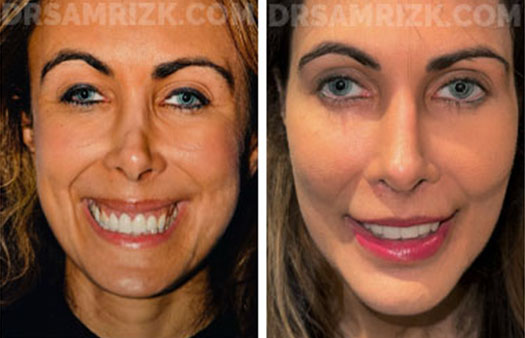
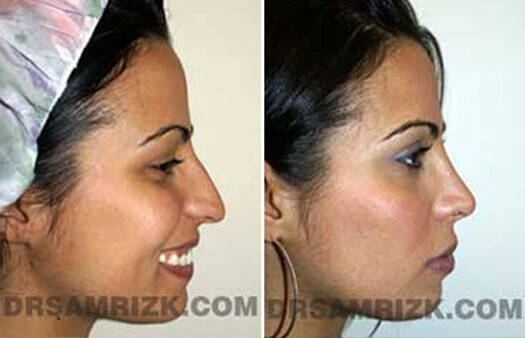
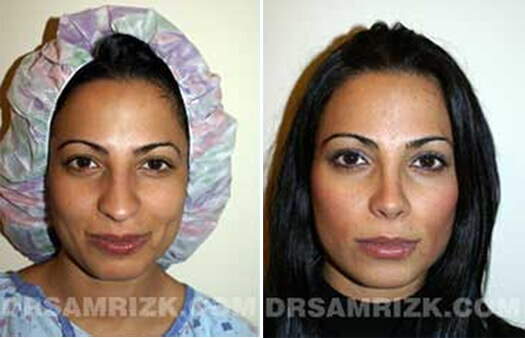
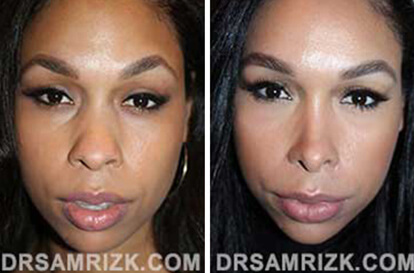
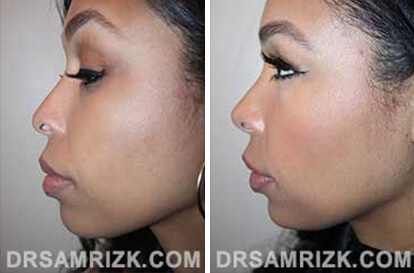
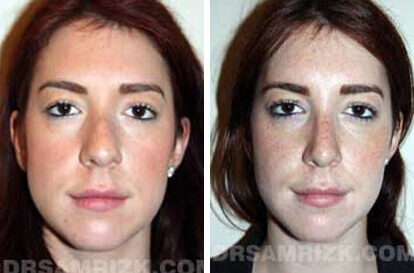
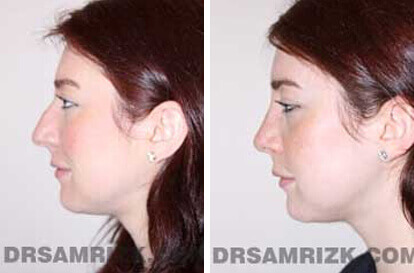
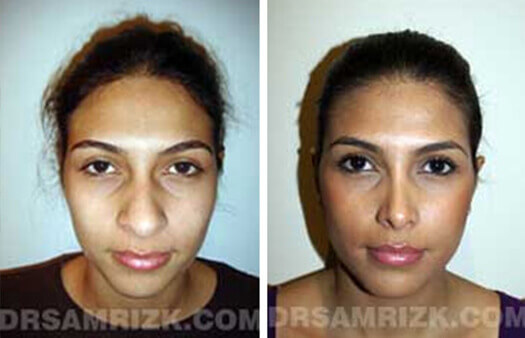
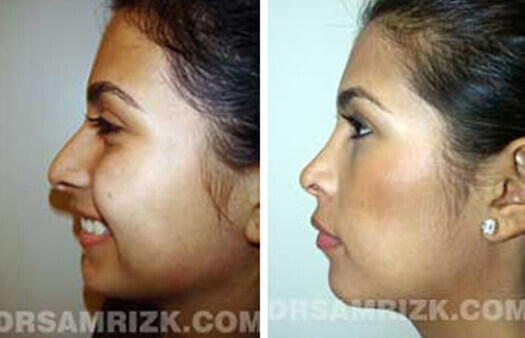
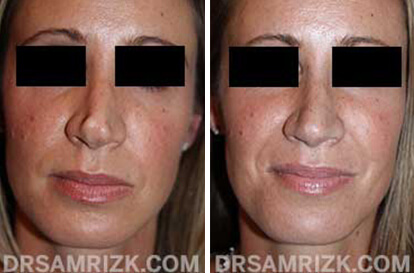
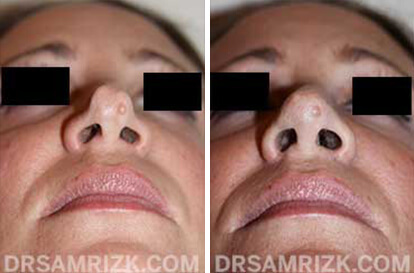
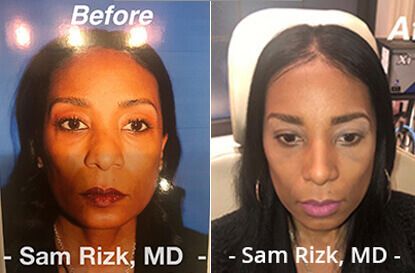
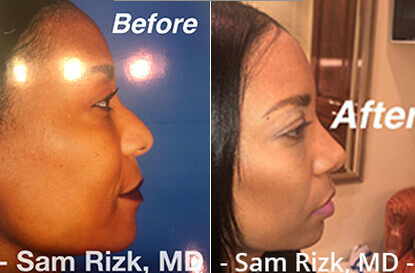
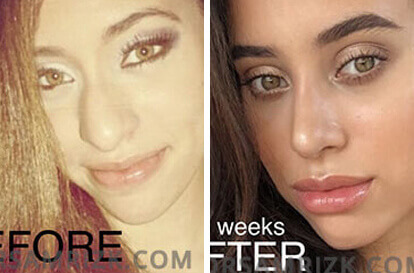
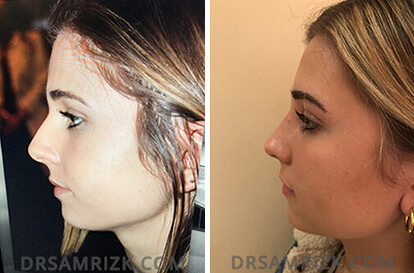
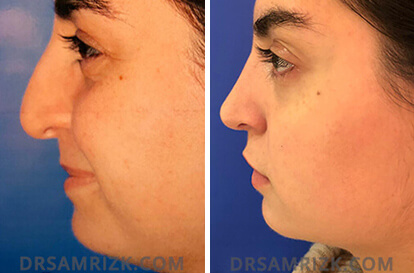
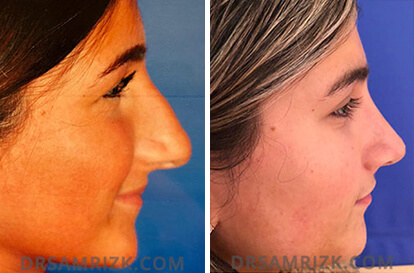
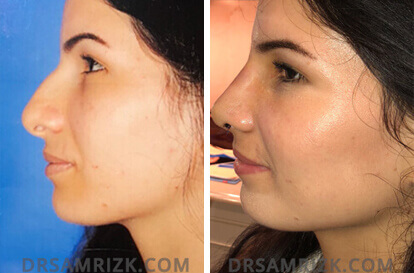
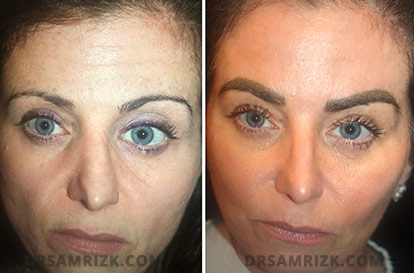
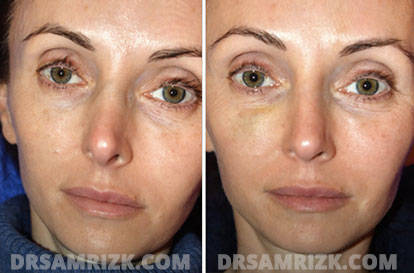
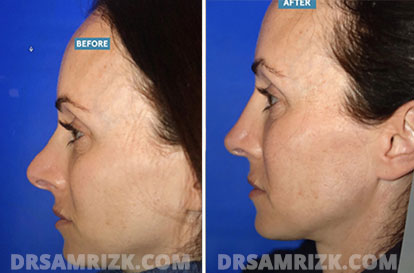
Real Rhinoplasty Client Results – Before & After
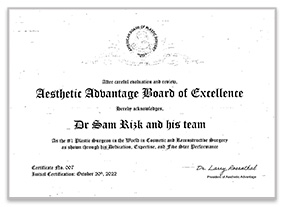
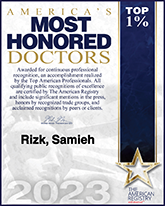
Awards & Certifications

2.jpg)
Your Guide to Rhinoplasty
We understand the rhinoplasty process can seem daunting. But don’t worry, we are here to reassure you every step of the way. You are in the hands of a nose job expert! Dr. Rizk has both the experience and the expertise needed to succeed in any nose surgery – including yours! Let us put your worries at ease so you can feel confident and excited about this transformation.
What Can Be Treated With Nose Surgery in NYC?
While nose surgery is one of the most challenging procedures where every milimeter counts, it is also one of the most rewarding. Regardless of if you want to fix a broken nose, smooth out alignment or correct troublesome breathing issues, you need someone who will have the expertise and training necessary for your procedure to go smoothly. A specialist will have the experience to complete intricate adjustments and seamless sculpting of the cartilage to ensure you achieve the desired result. Dr. Rizk is an expert when it comes to rhinoplasty operations. Surgery can treat the following conditions:
- Nose Bumps
- Crooked Nose
- Wide Bridge
- Overly Projected Tip
- Wide Nostrils
Why Choose Dr. Rizk For Your Rhinoplasty in New York
Selecting a NYC nose job surgeon3 may seem like a lot of work. However, it is a decision that will stick with you for a lifetime. As a result, patients should look for a surgeon, like Dr. Rizk who is:
- Double board-certified in facial plastic surgery (by ABFPRS) and otolaryngology-head and neck surgery (by ABO).
- Highly trained and has an extensive understanding of how to enhance and maintain the internal and external nasal structures.
- Trained to deal with both functional issues such as breathing or internal abnormalities as well as the external cosmetic structure of the nose.
- Experienced and has a selection of before and after images so that you can see their work, just as you would like to see an artist’s portfolio before buying one of their pieces.
- Specialized in the face and nose ensures they have a better understanding of the internal support of the nose and how to harmonize the face.
- A published author on the topic and educates fellow facial plastic surgeons
- Named the #1 ranked New York rhinoplasty surgeon.
- Member of the Rhinoplasty Society.
- Featured in Tatler Magazine as one of the world’s leading surgeons in nose jobs .
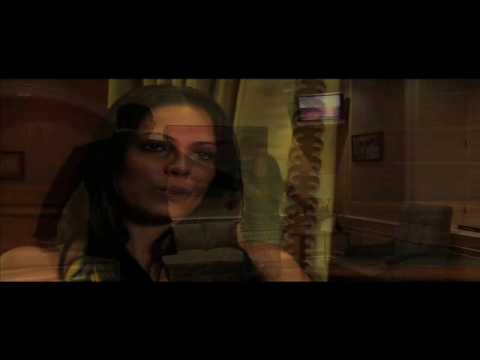
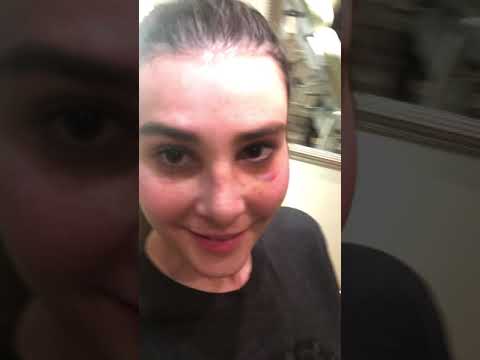
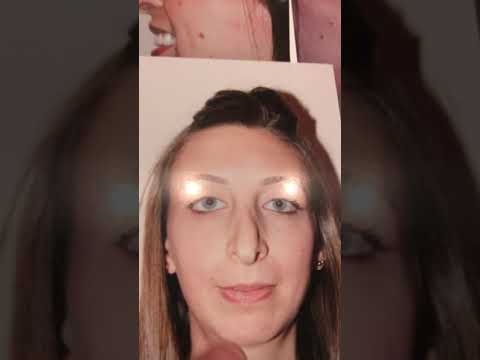
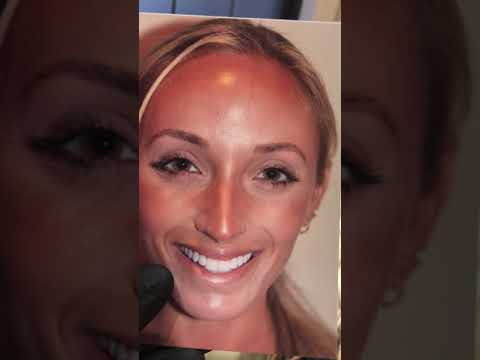
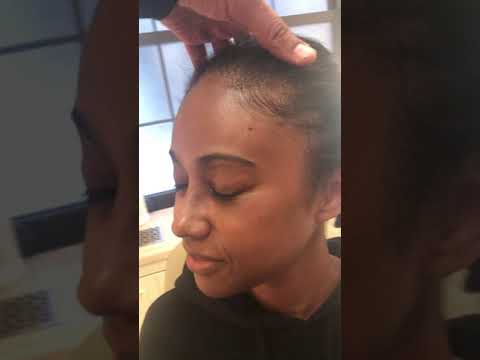
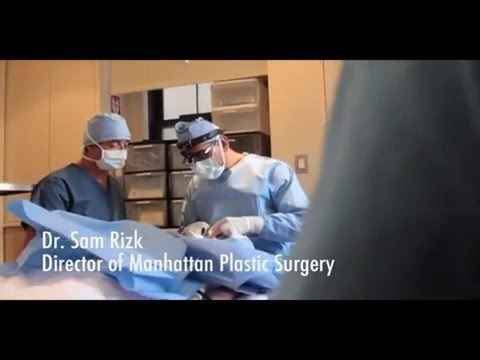
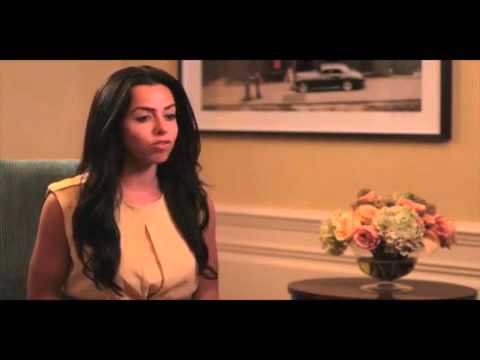
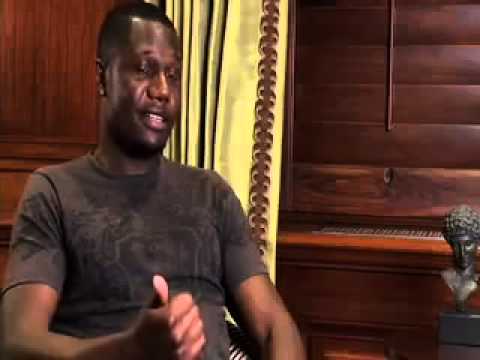
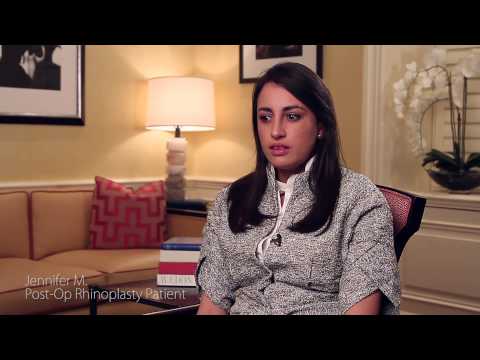
Video Testimonials
Step 1 – Consultation
Rhinoplasty begins with a consultation with Dr. Rizk, your surgeon. During this visit, he will examine your nose and face, take measurements, and ask you about your goals for surgery. He will also provide you with information on what to expect before, during, and after surgery. It is important that you understand all of this information so that you can feel comfortable with the process. Dr. Rizk will also take a look at your medical history to ensure that you are healthy enough for surgery. Be sure to ask any questions you have about the procedure during this visit. Any concerns you have should be addressed before proceeding with surgery.
Step 2 – Designing Your Nose
After the consultation, Dr. Rizk will design a surgical plan specifically for you. This plan will be based on your goals, facial structure, and other factors. He will prepare a 3D simulation of your expected results to help you visualize your new nose. Once he has designed this plan, he will discuss it with you in detail, make any necessary adjustments based on your feedback, and answer any questions you have. Dr. Rizk takes time to make sure you feel comfortable and at ease with the procedure and will explain the pre-procedure , operative, and post-procedure steps with you.
Step 3 – Preparing for Surgery
There are several things you need to do to prepare (both physically and mentally) for your rhinoplasty surgery. First, you will need to get lab work and imaging tests done – the exact tests vary depending on your age and pre-existing conditions but you should expect to take a blood test along with a chest x-ray. You will also need to stop taking certain medications and supplements a few weeks before surgery. You will need to avoid drinking alcohol and smoking cigarettes for at least two weeks before and after surgery. Of course, it is important to eat a healthy diet and get plenty of rest before surgery. Finally, you will need to arrange for someone to drive you home after surgery and stay with you for at least the first night. Don’t worry, all of this will be explained in detail before the surgery.
Step 4 – Procedure
Rhinoplasty is typically performed as an outpatient procedure, which means you will not have to stay in the clinic overnight. The surgery will take place in the surgical facility at Dr. Rizk’s clinic, and you will be given general anesthesia to keep you comfortable during the surgery. During the procedure, Dr. Rizk will make incisions inside your nose or sometimes across the columella, the strip of skin between your nostrils depending on if it is an open or closed rhinoplasty procedure2. He will then sculpt the bone and cartilage to create the shape you desire. In some cases, he may also need to place implants to achieve the desired results. After he has finished sculpting, he will carefully close the incisions with tissue glue, dissolvable stitches or tape. To help support your nose as it heals, tubes will be inserted into your nasal passageways and a stint will be placed over the bridge of your nose. These will be removed after a few days, usually within a week.
Step 5 – Recovery
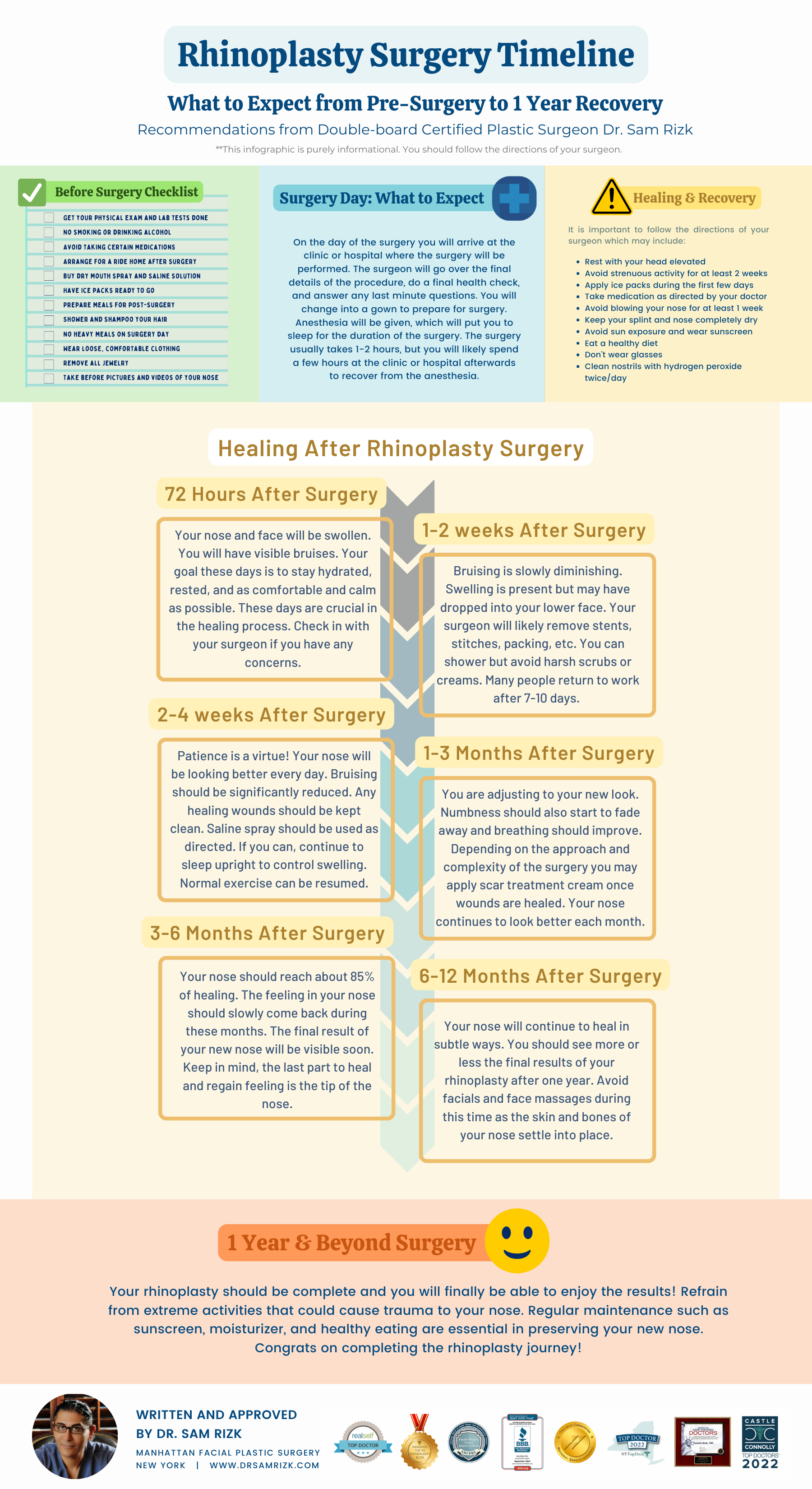
After the surgery, you will need to rest with your head elevated for the first few days. You may experience some pain and swelling during this time, but it can be controlled with medication. Most people take about a week off from work or school to recover. You will need to avoid strenuous activity for four to six weeks after the surgery. You should also avoid blowing your nose and wearing glasses during this time. It may take several months for the swelling to completely go down, but you will see a noticeable difference right away. After about 7 days, the splints and tubes will be removed and you will be able to see the new shape of your nose. However, it can take up to a year for all the swelling to dissipate and for your new nose to settle into its final shape. Dr. Rizk will set follow up appointments with you to make sure everything is healing smoothly post-op. Check our rhinoplasty recovery timeline here.
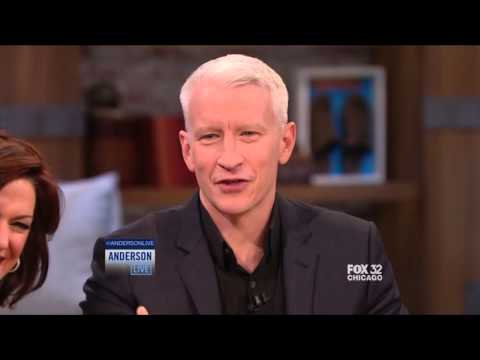
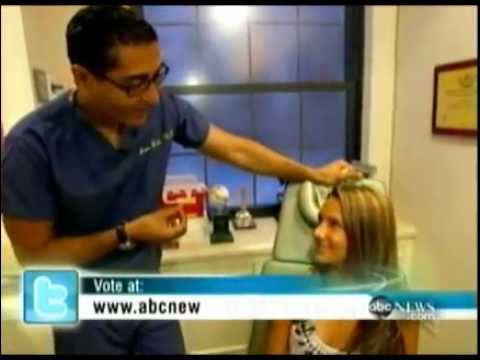
Dr Rizk In The Media
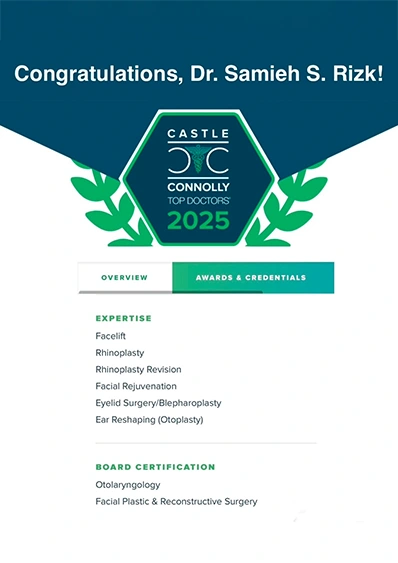
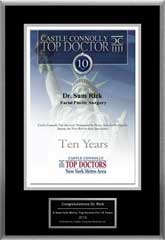
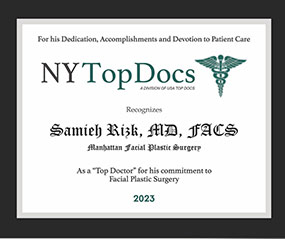
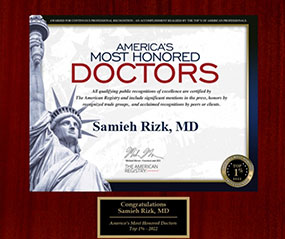
Dr. Rizk was voted by his peers as a Top Doctor in 2025 – For the 21th consecutive year!
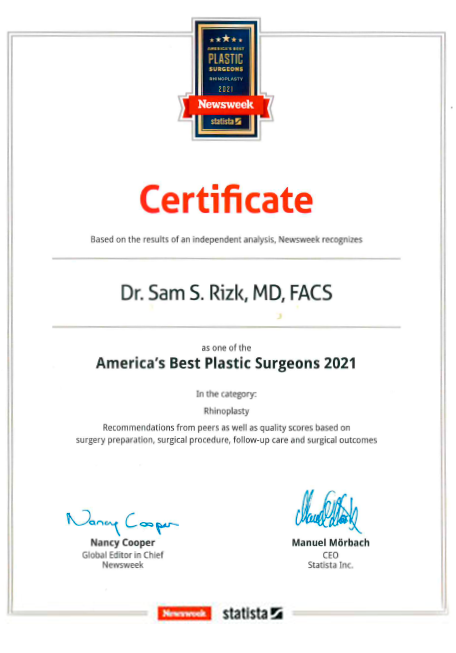
Certificate Rhinoplasty- Dr. Samieh Rizk 2021
Connolly Best Doctor
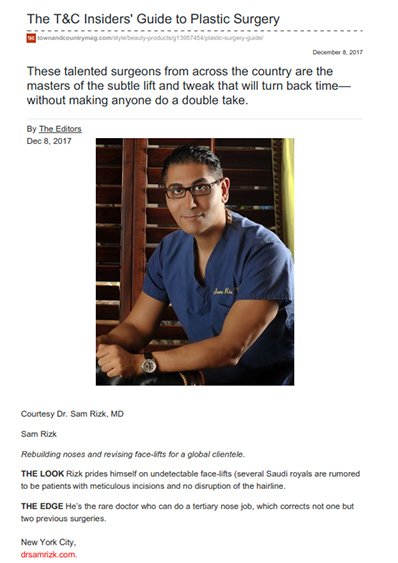
Dr. Rizk featured in Town & Country Magazine as one of the masters of the subtle lift and tweak that will turn back time
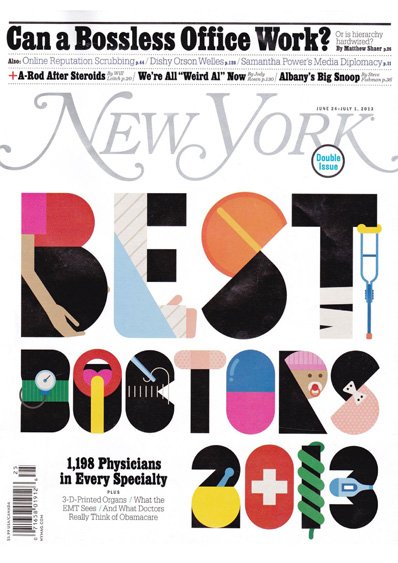
Voted by peers to New York Magazine’s 2013 Top Doctors
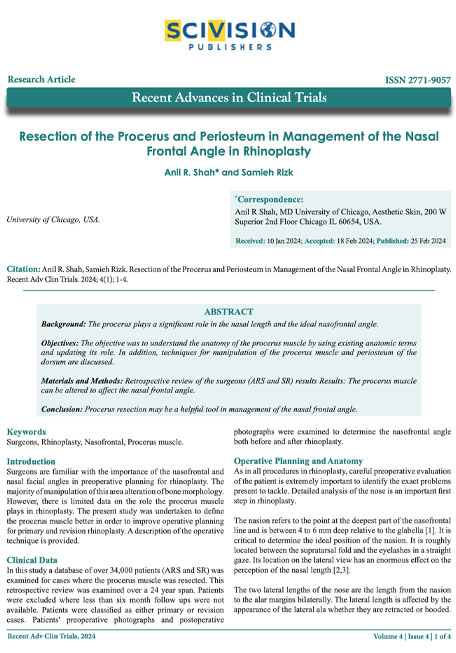
Resection of the Procerus and Periosteum in Management of the Nasal Frontal Angle in Rhinoplasty

Rhinoplasty Cost New York
Dr. Rizk is a renowned rhinoplasty surgeon in New York City, and he will be able to give you an exact quote for the procedure after your first consultation. Dr. Rizk is considered one of the most experienced surgeons in the city, so you can be confident that you are getting premium care when you choose him for your surgery. We understand cost is an important consideration. However, choosing a surgeon based on price alone is not a good idea. When it comes to your face, you want the finest possible results, and that is what you can expect when you choose Dr. Rizk. Plus, there are plenty of ways you can get help paying for your nose job in new york.
Types of Rhinoplasty: Open Versus Closed
There are two main types of rhinoplasty: open and closed. The approach that your surgeon takes during your procedure will depend on your unique goals and anatomy. Both of these approaches are widely used and there is no one-size-fits-all approach. Ultimately, the type of rhinoplasty that’s right for you will depend on your goals and your surgeon’s recommendations.
Open Rhinoplasty
Open rhinoplasty involves making an incision across the columella, the strip of skin that separates the nostrils. This approach provides your surgeon with greater visibility and access to the inside of your nose. As a result, open rhinoplasty is often used to address more complex issues, such as correcting a deviated septum or resolving breathing difficulties.
Closed Rhinoplasty
Closed rhinoplasty, on the other hand, is performed entirely through incisions made inside the nostrils. Because this approach doesn’t require any cuts to the exterior of the nose, it tends to result in less swelling and bruising than open rhinoplasty. Closed rhinoplasty is often used to address more minor issues, such as correcting a small bump or refining the tip of the nose.
If you’re considering rhinoplasty, it’s important to consult with a board-certified plastic surgeon, like Dr. Rizk, who has experience performing both open and closed procedures. During your initial consultation, Dr. Rizk will evaluate your goals and anatomy to determine which approach is likely to give you the results you’re looking for.
Rhinoplasty Versus Revision Rhinoplasty
A revision rhinoplasty is a secondary nose surgery that is performed to correct the issues that were not satisfactorily addressed in the first nose surgery, also known as a primary rhinoplasty. Noses that have had work done previously might suffer from structural support defects resulting in a short, scooped out, or overly pointy appearance and sometimes breathing difficulties. Revision rhinoplasty can be a very complex operation. But rest assured, Dr. Rizk can achieve the highest degree of precision using his signature three-dimensional high-definition telescope system which allows for a greater understanding of the internal nasal anatomy and how to flawlessly correct any defects.
As one of a handful of surgeons who are double board-certified in both otolaryngology and facial plastic surgery, Dr. Rizk routinely performs multiple revision rhinoplasty surgeries every week. There are many different techniques that can be used in revision rhinoplasty, and the approach that is best for you will depend on the specific issues that need to be addressed. Dr. Rizk will work with you to develop a personalized treatment plan that meets your individual needs and goals.
If you are unhappy with the results of your primary nose surgery, or if you are experiencing any of the above-mentioned problems, revision rhinoplasty may be right for you. To learn more about this procedure, and to find out if you are a candidate, please contact us today to schedule a consultation with Dr. Rizk.
Rhinoplasty (Nose Job) Risks
Rhinoplasty is a relatively safe procedure, but like all surgeries, it has its risks. These include bleeding, infection, and reactions to anesthesia. Dr. Rizk is a highly respected and experienced surgeon who specializes in nose jobs and other facial surgeries which means he has a deep understanding of the risks associated with rhinoplasty and prioritizes patient safety. Despite risks associated with the procedure, you can rest assured you are in good hands. In some cases, the nose may not heal properly, which can lead to an asymmetrical appearance.
The risk of this complication is higher in patients who have previously undergone nose surgery and are having a revision rhinoplasty. It is also possible for the nose to become blocked or obstructed following surgery. This can usually be treated with medication, but may require additional surgery in some cases. Overall, rhinoplasty is a safe and effective procedure with a high success rate. However, it is important to choose a highly skilled and experienced surgeon to avoid unnecessary complications.
Who Is A Candidate for Rhinoplasty?
Most people who are considering rhinoplasty are unhappy with the size, shape, or proportions of their nose. Some people have a medical reason to have rhinoplasty, such as a deviated septum that makes it difficult to breathe. Although anyone can technically undergo rhinoplasty, it is important to have realistic expectations and to be in good overall health. The ideal candidates for rhinoplasty are:
- Teens aged 14-15 years old and up who are unhappy with their facial profile
- Individuals with a bump, wide tip, or large flaring nostrils
- Patients with a previous injury causing a crooked, misshapen nose
- Those with breathing or sinus problems that interfere with their day-to-day life
- Individuals who had a past rhinoplasty surgery resulting in a scooped outlook, unnatural upturn, excessively pointy tip, or collapsing asymmetrical areas
- Patients seeking profile or tip changes
When patients are suffering from breathing or sinus problems, functional repairs can be combined with aesthetic modifications. Dr. Rizk’s innovative techniques4 employing this combined approach were published in Annals of Plastic Surgery5. Dr. Rizk may choose not to operate on prospective patients who he does not believe to be good candidates for surgery.
Common Rhinoplasty Procedures
There are different types of rhinoplasty, depending on the goals of the patient. For instance, some people may want to reduce the size of their nose, while others may want to change the shape. Some of the most common types of rhinoplasty include:
Reduction Rhinoplasty: Performed to reduce the size of the nose.
Augmentation Rhinoplasty: Performed to increase the size of the nose.
Reshaping Rhinoplasty: Performed to change the shape of the nose. This type of surgery can be performed for cosmetic reasons or to correct a birth defect or injury.
Teen Rhinoplasty: This type of rhinoplasty is geared towards teenage patients who are not yet finished growing. The goal of teen rhinoplasty is to achieve the desired look without causing any damage that could interfere with the natural development of the nose.
Revision Rhinoplasty: Surgery is implemented when a previous nose job has not achieved the desired results. Revision rhinoplasty can be more difficult than primary rhinoplasty, and it is important to find a surgeon who has experience with this type of surgery.
Ethnic Rhinoplasty: Takes into account the unique features of the patient’s ethnic background. The goal of Ethnic Rhinoplasty is to create a nose that looks natural for the patient’s face while still achieving the desired results.
Rhinoplasty for Men: Considers the unique features of the male nose. The goal is to create a nose that looks natural for the patient’s face while still achieving the desired results.
Rhinoplasty for Women: Considers the unique features of the female nose. The goal is to create a nose that looks natural for the patient’s face while still achieving the desired results.
Septoplasty: Approach used to correct a deviated septum. The septum is the bone and cartilage that divides the nostrils. A deviated septum can cause breathing problems and may require surgery to correct.
Nasal Obstruction Correction: Performed to clear the airway and improve breathing. It can be caused by a number of things, including a deviated septum, allergies, or a blockage in the nasal cavity.
Functional Rhinoplasty: This type of nose surgery is performed to improve the function of the nose. It can be caused by a number of things, including a deviated septum, allergies, or a blockage in the nasal cavity.
Spreader Grafts in Rhinoplasty: By placing cartilage grafts between the nasal bones and cartilage, the middle vault gains structure and support, helping prevent collapse, improving airflow, and addressing aesthetic concerns such as an inverted-V deformity.
Finesse Rhinoplasty: Refines minor imperfections and asymmetries, enhancing nasal contours without drastic changes. It aims for subtle improvements, preserving personal nasal character while achieving harmony with surrounding facial features.
Nose Reconstruction After Cancer: Restores structure and function lost during tumor removal. Techniques may include grafts or flaps to rebuild nasal form, support breathing, and help patients regain confidence.
Piezo Rhinoplasty: Ultrasonic devices deliver controlled vibrations to gently reshape nasal bones with minimal damage. Reduced bruising and swelling are common benefits, leading to a more comfortable healing experience than traditional methods.
FAQ
How much is a rhinoplasty?
Rhinoplasty, also known as a nose job, is one of the most popular cosmetic surgeries. The cost of the surgery will depend on the surgeon and the complexity of the surgery. Factors that affect the cost include the surgeon’s fee, operating room costs, anesthesia fees, and post-operative care.
How long does it take to recover from rhinoplasty
Most people take a minimum of one week off from work or school to recover from rhinoplasty. During this time, you should avoid strenuous activity and direct sunlight. You may have some swelling which will gradually reside over the next couple of months.
What is the difference between a nose job and rhinoplasty?
A nose job is a common nickname for rhinoplasty. Rhinoplasty is the medical term for surgery to change the shape of your nose.
Is rhinoplasty covered by insurance?
Rhinoplasty is usually considered a cosmetic procedure and is not typically covered by insurance. However, if your surgery is being performed to correct a birth defect or injury, it may be covered. Be sure to check with your insurance company before having surgery.
How long does swelling last after rhinoplasty?
Swelling is a normal part of the healing process after rhinoplasty. It can take several months for all the swelling to go down completely. However, you should see a noticeable difference in the shape of your nose within a few weeks.
Are nose jobs worth it?
This is a personal decision that you will have to make. However, many people report feeling more confident and attractive after having surgery. Be sure to talk to your surgeon about your goals and expectations before having surgery.
What is the fastest way to recover from a nose job?
There is no one single “fastest way” to recover from a nose job. However, there are certain things you can do to help speed up the healing process. Such as resting, staying hydrated, using anti-inflammatories, and eating a healthy diet. Be sure to talk to your surgeon about what you can do to help speed up your recovery.
What is the difference between a nostril reduction and rhinoplasty?
A nostril reduction is a specific type of rhinoplasty that involves reducing the size of the nostrils. Be sure to talk to your surgeon about the different types of rhinoplasty before having surgery.
What happens if I sneeze after rhinoplasty?
Sneezing can cause the nose to swell after surgery. However, if the surgery is performed correctly, you should have nothing to worry about. In other words, your nose is not going to be damaged by a sneeze. Be sure to talk to your surgeon about your concerns.
Can I smoke or drink alcohol after rhinoplasty?
No, you should not smoke after rhinoplasty. Smoking can cause the nose to swell and delay healing. You can drink alcohol after rhinoplasty. However, you should avoid drinking for at least two weeks after surgery. Be sure to talk to your surgeon about when it is safe for you to drink alcohol.
How do you shower after rhinoplasty?
You should avoid getting your incisions wet for at least two weeks after surgery. Just be careful not to submerge your face under the water. When you need to wash your face, be gentle and avoid incision areas. Be sure to talk to your surgeon about when it is safe for you to shower.
Can I sleep on my side after rhinoplasty?
No, you should not sleep on your side for at least two weeks after surgery. Sleeping on your side can cause the nose to swell unnecessarily. Be sure to talk to your surgeon about when it is safe for you to sleep on your side.
How long does rhinoplasty surgery take?
Typically, a nose job in New York with Dr. Rizk takes around two hours. Dr. Rizk performs a meticulous operation to ensure the results you desire. To assess nuances in the shape of the nose and reduce swelling, Dr. Rizk spends time creating his surgical plan before the surgery with detailed diagrams to decrease operation time. Those needing a revision nose job can expect the procedure to take between three to four hours, depending on scar tissue, graft usage, and harvesting tissue from other areas.
When can I fly after rhinoplasty?
You should avoid flying for at least two weeks after surgery. Be sure to talk to your surgeon about when it is safe for you to travel.
References
1 American Society of Plastic Surgeons. Rhinoplasty. Available: https://www.plasticsurgery.org/news/plastic-surgery-statistics.
2 Outcomes of Closed Versus Open Technique of Rhinoplasty During Primary Repair of Unilateral Cleft Lip: A Systematic Review. Available: https://journals.sagepub.com/doi/10.1177/1055665618787689.
3 Harvard Health Blog. David A. Shaye, MD, MPH. Thinking about rhinoplasty? Available: https://www.health.harvard.edu/blog/thinking-about-rhinoplasty-2019030616112.
4 MedEsthetics. Sam Rizk, MD: Blending Art and Science. Available: https://www.medestheticsmag.com/business/article/21146126/sam-rizk-md-blending-art-and-science.
5 S S Rizk, D R Edelstein, A Matarasso. Concurrent functional endoscopic sinus surgery and rhinoplasty. Available: https://pubmed.ncbi.nlm.nih.gov/9111889/.
By Dr. Sam S. Rizk, M.D., FACS.
Dr. Rizk is a double-board-certified facial plastic surgeon who specializes in rhinoplasty surgery and is a recognized expert on the latest advances in facial plastic surgery techniques. He performs a range of facial plastic surgeries at his New York practice.